

You were not imagining it. Your body was telling the truth the whole time
There is a particular kind of exhaustion that comes not from the symptoms themselves — but from being told, again and again, that the symptoms aren't real.
You know the feeling. You sit in a doctor's office and describe what's been happening in your body — the swelling that comes and goes, the fatigue that doesn't match your sleep, the heaviness in your legs, the puffiness in your face every morning. And the response, delivered kindly or not, is some version of the same thing:
"It's probably just stress." "You might want to look at your diet." "That's pretty normal for your age." "Your labs look fine."
And you leave with no answers, wondering if you imagined it. You didn't.
Why Women's Symptoms Get Dismissed
This is not a small problem. Research has consistently shown that women's pain and physical symptoms are taken less seriously in medical settings than men's — and that the gap is even wider for women of color. Symptoms that would prompt investigation in one patient are attributed to stress, weight, or anxiety in another.
The result is a generation of women who have learned to distrust their own bodies. Who have been told so many times that what they feel isn't real that they've stopped reporting it. Who are managing conditions that went undiagnosed for years — sometimes decades.
If you are one of those women, this post is for you.
The Lymphatic System — The Most Overlooked Piece
One of the most common reasons women's symptoms go unexplained is that the lymphatic system rarely gets discussed in standard medical appointments — even when it's at the root of what someone is experiencing.
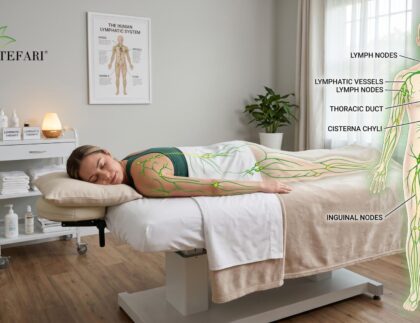
Your lymphatic system is a vast network of vessels, nodes, and fluid that runs throughout your entire body. It is responsible for:
- Filtering waste and toxins from your tissues
- Carrying immune cells to where they're needed
- Moving excess fluid out of your tissues and back into circulation
- Supporting your body's inflammatory response
Unlike your circulatory system, the lymphatic system has no pump. It depends on movement, breathing, and muscle contractions to keep fluid moving. When it slows down — due to surgery, illness, prolonged sitting, heat, stress, or simply the demands of a body that has been through a lot — the effects can be widespread and confusing.
And because lymphatic dysfunction doesn't show up clearly on standard blood panels, it often goes undetected in conventional medical settings.
Symptoms That May Be Lymphatic — Not "Just Stress"
Here are some of the most commonly dismissed symptoms that can have a lymphatic component:
Unexplained puffiness or swelling: Swelling in the hands, feet, ankles, legs, or face — especially in the morning or after long periods of sitting or travel — is one of the clearest signs that lymphatic flow is sluggish. This is frequently attributed to diet, hormones, or "just getting older." Sometimes it is those things. But often, the lymphatic system needs support.
Fatigue that sleep doesn't fix: When your lymphatic system is working overtime to manage inflammation and fluid, it pulls on your overall energy reserves. This produces a specific kind of tired — the kind that isn't resolved by a full night of sleep, that feels like something is working inside you that you can't see.
Heaviness in the limbs: Many women describe their legs or arms feeling heavy, dense, or like they're moving through water. This sensation is a hallmark of lymphatic congestion.
Frequent illness or slow recovery: Your lymphatic system is central to your immune function. When it's compromised, you may get sick more often, take longer to recover from illness, or find that your body struggles to resolve inflammation.
Skin changes: Dull, congested skin — particularly skin that looks puffy, feels thickened, or breaks out persistently — can be connected to lymphatic function. The skin is one of the body's elimination organs, and when the lymphatic system isn't clearing efficiently, the skin often reflects it.
Digestive discomfort and bloating: There is a significant concentration of lymphatic tissue in the gut. When lymphatic flow in the abdominal region is sluggish, it can contribute to bloating, digestive irregularity, and a general sense of internal congestion.
Brain fog and difficulty concentrating: This one surprises people, but lymphatic function in the brain — supported by a recently discovered system called the glymphatic system — plays a role in clearing cellular waste from brain tissue. Sluggish lymphatic function can contribute to cognitive heaviness and difficulty focusing.
Conditions That Are Frequently Missed or Delayed
Beyond general lymphatic sluggishness, several specific conditions are regularly missed or delayed in diagnosis — particularly in women:
Lymphedema Lymphedema is a chronic condition in which lymphatic fluid accumulates in the tissues, causing persistent swelling. It can be primary (present from birth or developing without a clear cause) or secondary (resulting from damage to the lymphatic system, most often from cancer treatment, surgery, or infection).
Secondary lymphedema is most commonly diagnosed after breast cancer treatment — but it can develop anywhere in the body, and it can appear months or even years after the triggering event. Many women report being told that their swelling was weight gain, inflammation from diet, or simply normal post-surgical healing — for months before receiving an accurate diagnosis.
Lipedema Lipedema is a chronic condition involving the abnormal accumulation of fat cells — predominantly in the legs, hips, and sometimes arms — that is disproportionate to the rest of the body. It is almost exclusively found in women, is often painful, and does not respond to diet or exercise the way typical fat distribution does.
It is also one of the most consistently misdiagnosed conditions in women's health. The majority of women with lipedema are told they simply need to lose weight — sometimes for years — before receiving an accurate diagnosis.
Autoimmune conditions with a lymphatic component Many autoimmune conditions — including lupus, rheumatoid arthritis, Sjögren's syndrome, and Hashimoto's thyroiditis — have a significant lymphatic component. Swollen lymph nodes, fluid retention, and fatigue are common features. These conditions are underdiagnosed in women, particularly in the early stages.
What Manual Lymphatic Drainage Can Do
Manual Lymphatic Drainage (MLD) is a specialized massage technique that works directly with the lymphatic system — using gentle, precise, rhythmic movements to encourage lymph fluid to move through its natural pathways.
It is not a cure for any of the conditions above. But it is one of the most evidence-supported complementary therapies for lymphatic health, and it has a meaningful role to play for women who are:
- Managing a confirmed lymphedema diagnosis
- Recovering from surgery (especially procedures that involved lymph node removal)
- Supporting their body through cancer treatment
- Dealing with unexplained swelling, heaviness, or fluid retention
- Working to reduce chronic inflammation
- Simply seeking to support their lymphatic system as a wellness practice
What MLD offers — beyond the physical — is something harder to quantify. It is an hour in which someone skilled is paying close attention to your body. Listening to what it's holding. Working with it rather than against it.
For many of the women I see, that experience — of being believed, of having their symptoms taken seriously, of being cared for with precision and intention — is as healing as the session itself.
You Were Right
If you have been dismissed, minimized, or told to wait and see — your body was not lying to you.
Symptoms are signals. They are your body's way of communicating that something needs attention. The fact that those signals were overlooked in a medical setting does not make them less real.
At Onyeka Tefari Wellness & Spa, we offer Manual Lymphatic Drainage and Oncology Massage in San Diego for women at every stage of their health journey — from those managing specific conditions to those who simply know their body needs support and are ready to listen to it.
You don't have to have a diagnosis to deserve care. You just have to be here.
Learn about our MLD services | Learn about Oncology Massage | Book a session
Onyeka Tefari Wellness and Spa offers Manual Lymphatic Drainage, Oncology Massage, and holistic wellness services in San Diego, CA. Located at 8755 Aero Drive Suite 225, San Diego, CA 92123. Book online at onyekatefari.com.
JOIN OUR LYMPHADEMA SUPPORT GROUP ON FACEBOOK!
We have a supportive community where you can connect with others facing similar challenges. Click the link below to join:
Related Services

Feel our
Oncology Massage
Embark on a journey of healing and tranquility with our specialized Oncology Massage, a form of soft-tissue mobilization designed to bring comfort and support to those navigating the challenges of cancer treatment.

Unique
Manual Lymphatic Drainage
Manual Lymphatic Drainage massage is a form of soft-tissue mobilization dramatically enhances lymph formation and promotes drainage within the superficial and deep systems of the lymph vascular network.

Unique
Synergistic Massage
The Synergistic Massage Integrates both Eastern & Western healing methods to restore the harmonious flow of life within. It combines the nurturing Western oil massage with the therapeutic benefits of Asian bodywork methods.